Service
AI systems & automation
I help identify repeated tasks that consume attention: requests, documents, research, summaries, qualification or checks. We start from a clear source of truth, automate what is simple first, then add AI when language or context genuinely matters.
Based near Liège, I keep the work close to the team’s real constraints: make daily work lighter without losing control over sensitive decisions.
Method
Find what repeats before automating it
AI is not the starting point. The starting point is repeated work that keeps people away from judgment, customer relationships or the craft of the business.
Decision point
- sensitive output stays reviewed or limited
- the next step depends on observable results
- we keep, reframe or stop before the project gets heavier
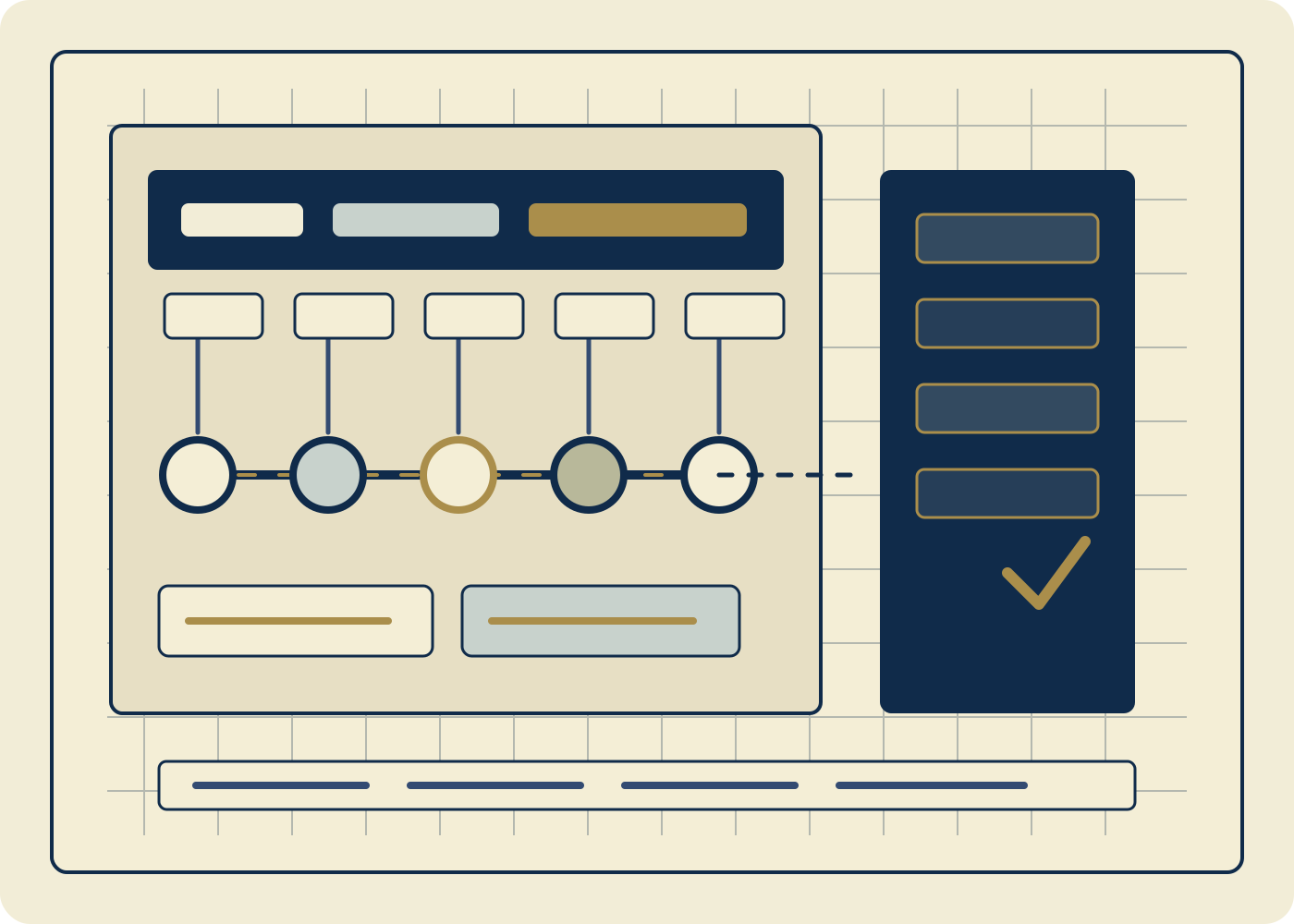
Stage 01
Observe real work
Identify recurring tasks, sources and decisions the team has to repeat.
Stage 02
Build a testable flow
Test automation on representative examples, with AI only where it brings useful understanding.
Stage 03
Decide what comes next
Keep what works, simplify what stays fragile or stop early if value is not clear.
Useful cases
When should you automate a task with AI?
A task is a good AI automation candidate when it happens often, consumes attention and needs enough language or context to go beyond simple rules.
- Repeated work.
Requests, documents, research or summaries often come back with the same logic.
- Interpretation needed.
Rules alone are not enough: the work requires reading, classifying, summarizing or prioritizing with context.
- Human review.
Sensitive actions stay reviewed, validated or limited before wider integration.
First cycle
What does a first AI automation cycle deliver?
A first cycle delivers a short version that can be tested on your examples. It should make the next decision clear: continue, reframe or stop before the project becomes too heavy.
- Short scope.
One priority task, the useful sources, the risks and the point where a human takes over.
- Version on real cases.
A testable flow on your examples: assistant, document triage, qualification, summary or internal process.
- Visible limits.
Traces, review, critic mode and action limits before any sensitive automation.
Control
How do you keep human review in an LLM workflow?
Sensitive actions stay visible, limited and validated by a person. The automation prepares the work, but it should not replace judgment when the risk is real.
- Clear roles.
We separate what the system can prepare, what it can propose and what a person must validate.
- Useful traces.
Important sources, decisions and outputs stay available so the result can be corrected or explained.
- Action limits.
Sending, changing or deciding on sensitive items keeps a validation step before wider integration.
FAQ
Frequently asked
- Do we need a very precise use case already?. No. I can start by auditing the real work, spotting repeated tasks and turning an intuition into prioritized, testable automation.
- Do our data sources already need to be clean?. Not necessarily. We can start small, audit what exists and clean only the sources that matter for the first useful cycle.
- Do you only provide prompts?. No. I can scope, build a first version, integrate, document and harden the process with real supervision and accountability around it.
- What if the verdict is “stop”?. That is still a good result. The point is to stop fragile work from consuming more budget and attention than it should.
Send the context and one example of repeated work. I’ll reply with a clear first direction.